

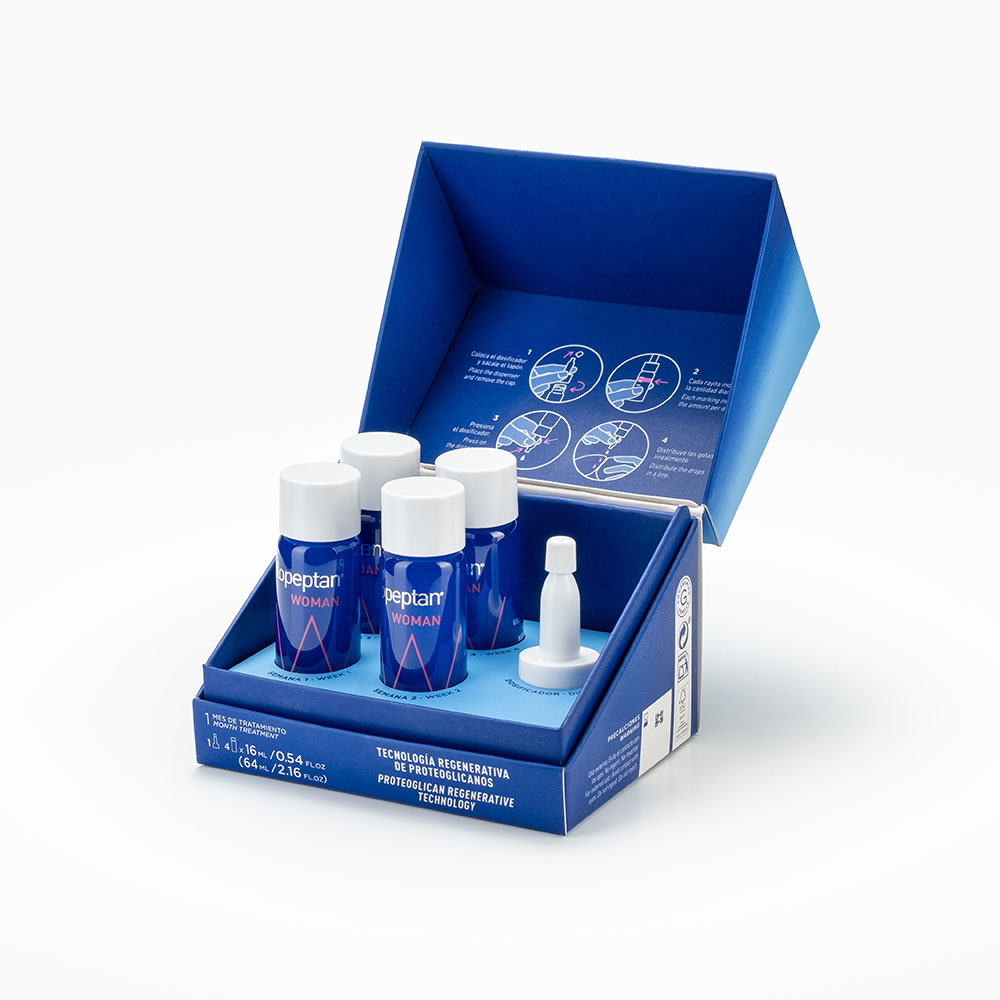
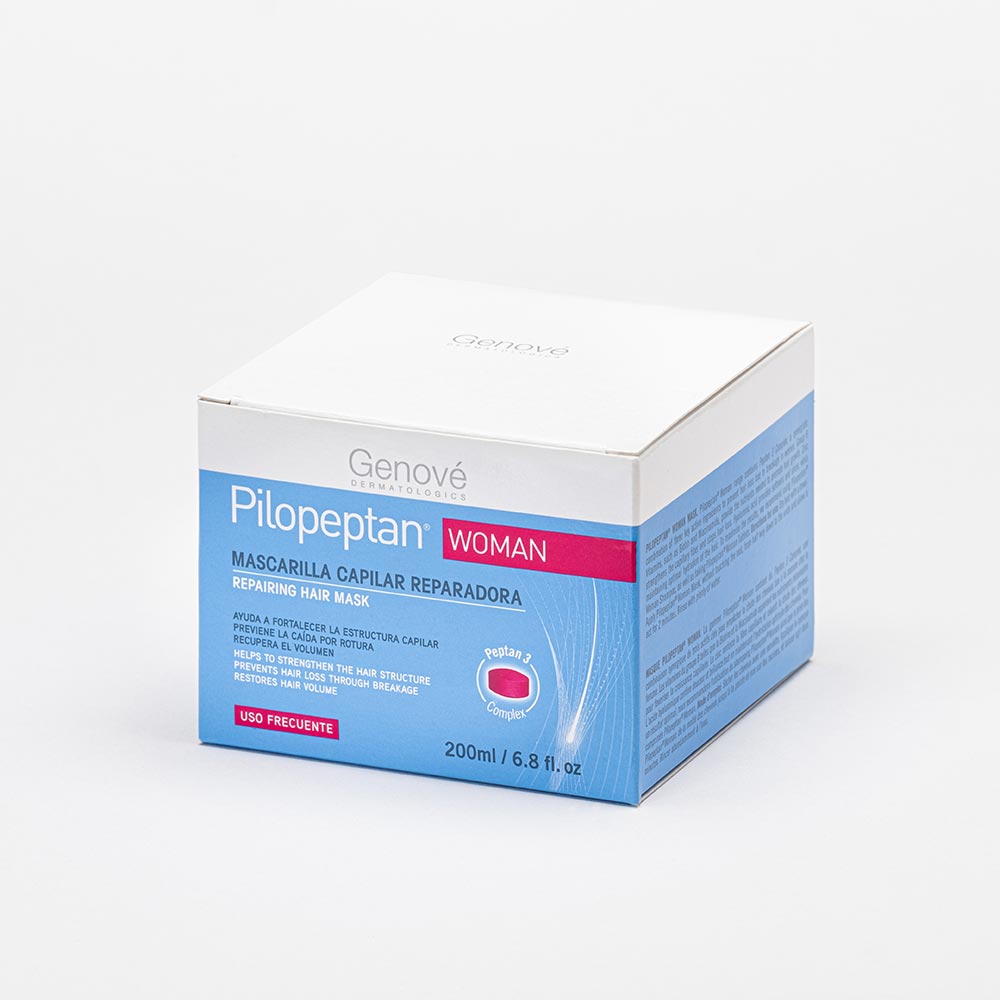
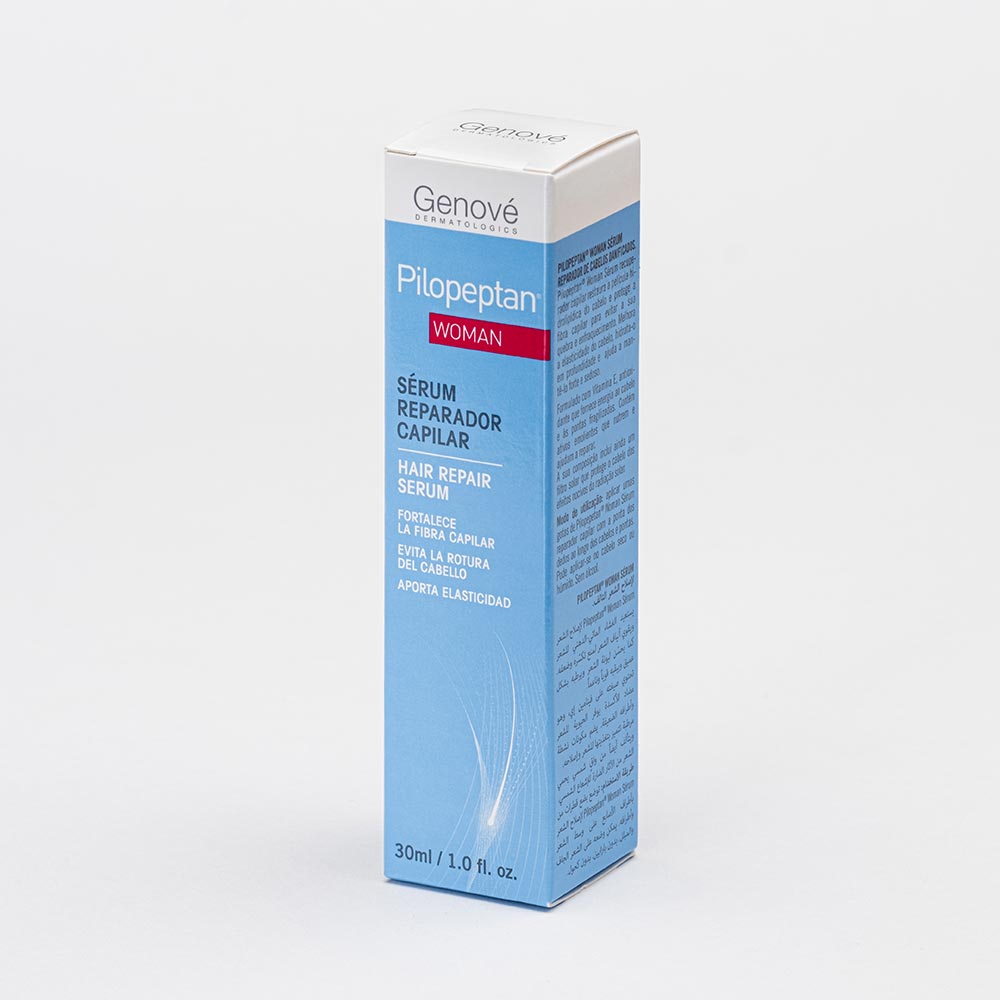
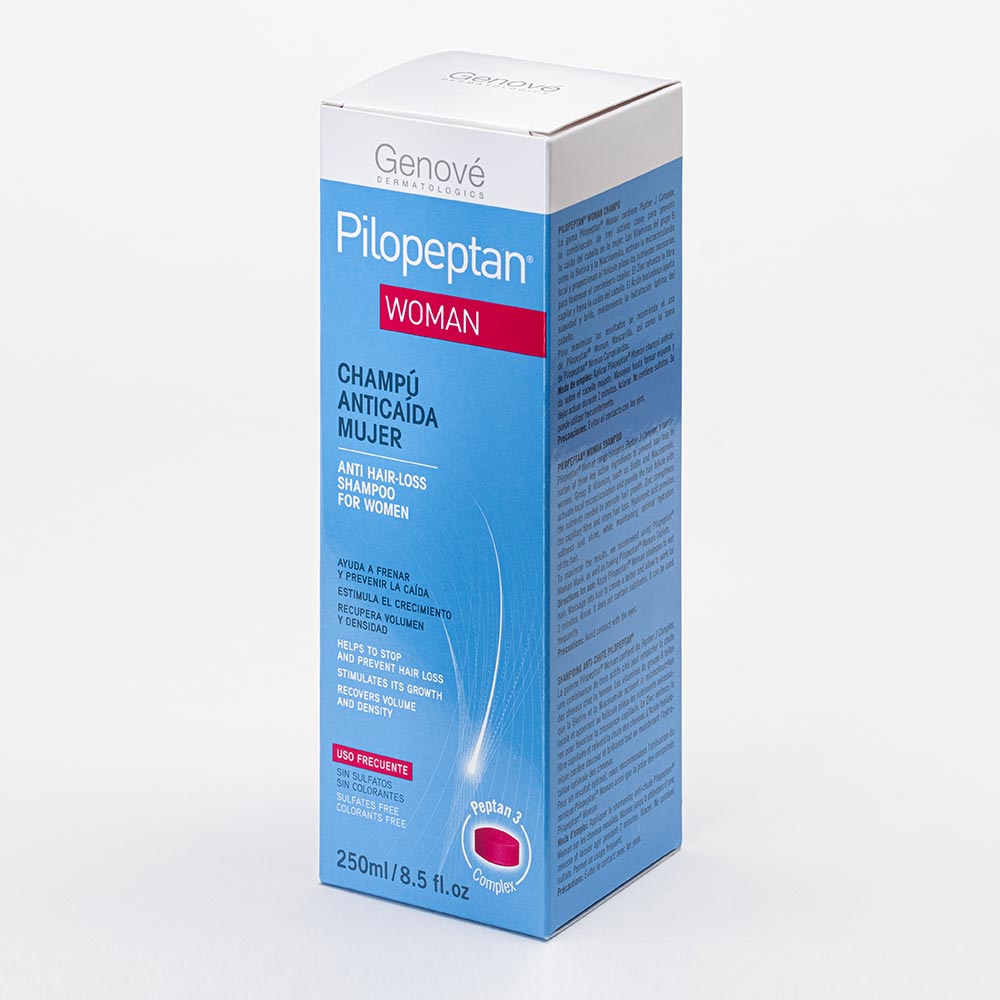
Discover the new Pilopeptan range: Science and innovation for your hair care.

Hair from a scientific perspective

Hair is a filamentous structure that grows from hair follicles, the living part inside the dermis, connected to the bloodstream. In addition to its aesthetic value, it performs protective (thermal regulation and protection from solar radiation) and sensory functions. Its health is a visible reflection of our overall health.

What is it made of?

Hair is composed almost entirely of keratin, a structural protein rich in sulphur. If we analyse it in detail, we see that its composition also contains lipids, minerals and trace elements that are essential for proper growth.

Proteins

Mainly keratin, composed of amino acids. Sulphur amino acids such as cystine and methionine are key, as their disulphide bonds provide strength and shape to the hair.

Lipids

They contain fatty acids, cholesterol, ceramides and squalene, which contribute to the protective barrier and natural shine.

Agua

Present in varying amounts, depending on the environment and condition of the hair. Provides flexibility and elasticity.

Others

In smaller quantities, it contains melanin, which is responsible for colour, minerals such as zinc, iron and selenium, which are essential for structural integrity, and B vitamins, which are essential for growth and strength.

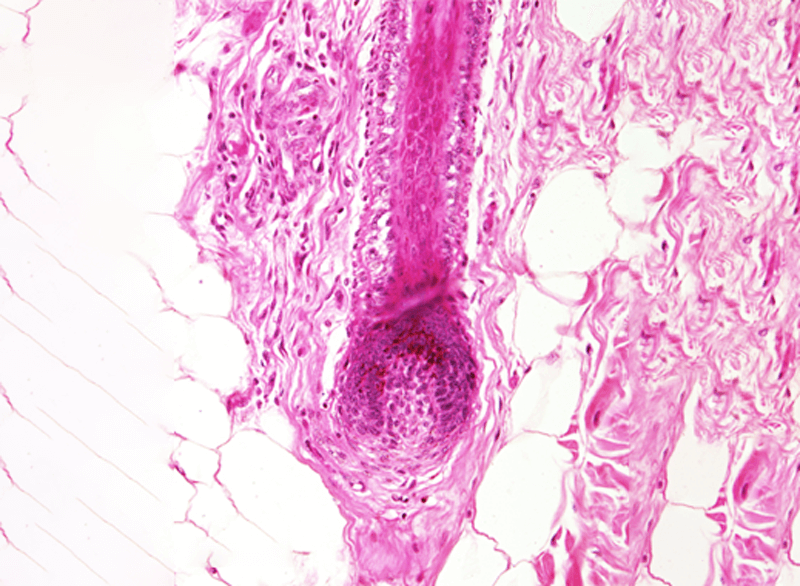
The hair follicle

Proteoglycans are also found in the extracellular matrix of the hair follicle, where they play a very important regulatory role in the hair cycle.

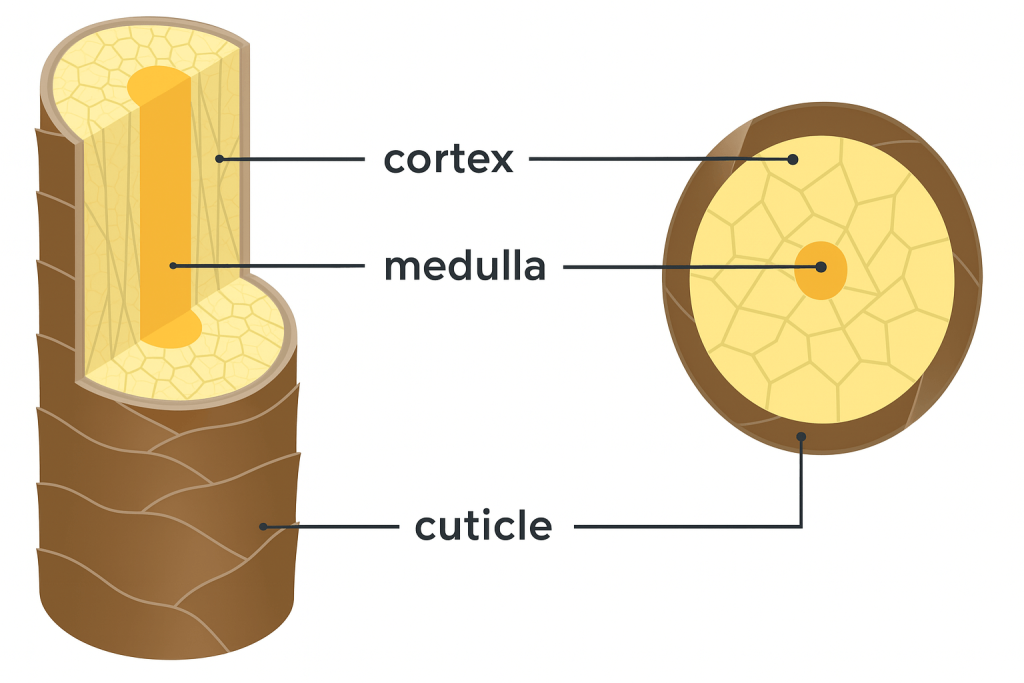
The hairy stem

The hairy stem
The outermost layer, formed by flat cells overlapping like fish scales. It acts as a protective barrier against external agents (sun, heat, pollution). When damaged, hair looks rough, loses shine and becomes brittle.
Middle layer and thickest layer. This is where the intertwined keratin strands that give hair its mechanical strength and the melanin that gives it its colour are found.

Hair growth cycle

El cabello crece en ciclos continuos pasando por distintas fases:

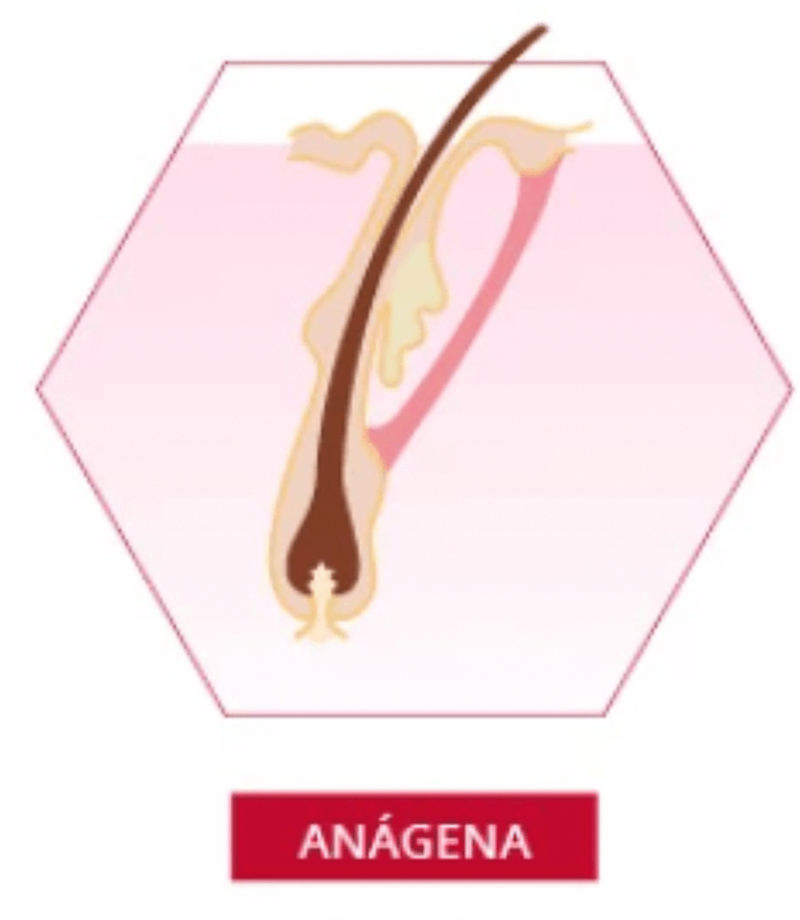
Anagen phase
(active growth): lasts from 2 to 7 years, determines hair length.

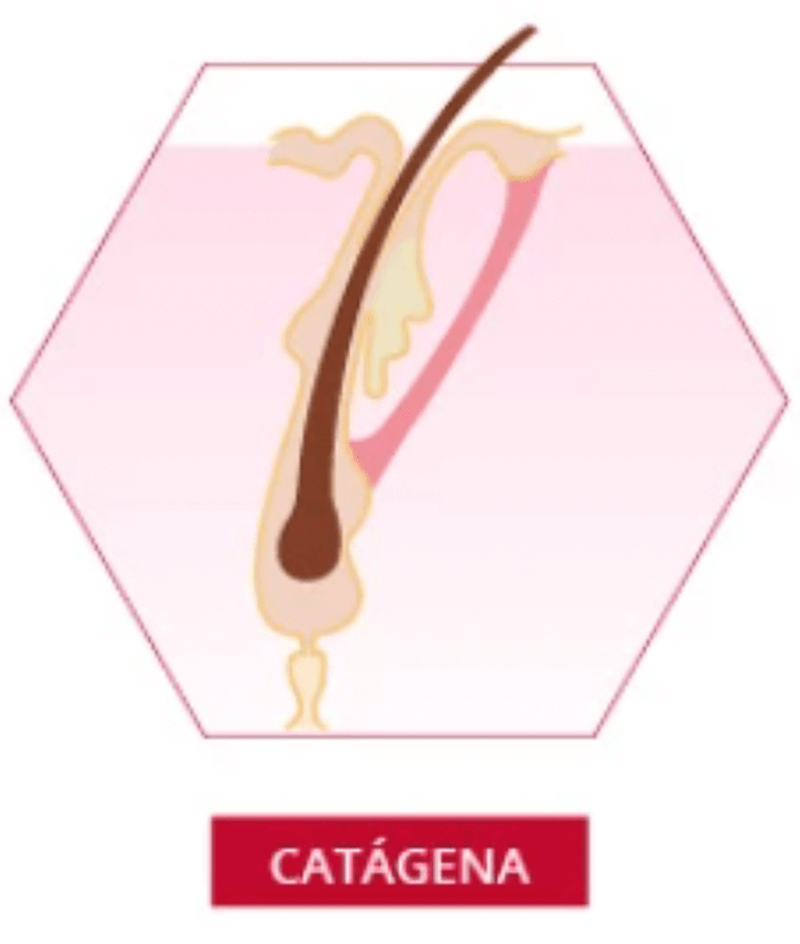
Fase catágena
(transición): periodo breve
(2-3 semanas) donde se detiene el crecimiento.

Telogen phase (rest/shedding): lasts about 3 months; at the end, the hair falls out and the follicle restarts the cycle.

Hair growth cycle

Hair grows in continuous cycles, going through different phases:

Anagen phase
(active growth): lasts from 2 to 7 years, determines hair length.

Catagen phase
(transition): a brief period (2-3 weeks) during which growth stops.

Telogen phase
(rest/shedding): lasts about 3 months; at the end, the hair falls out and the follicle restarts the cycle.

A healthy scalp keeps around 85-90% of hair follicles in the anagen phase.
A natural hair loss of around 100 hairs per day is considered normal.

What our users think

Lucía García
Lucía García
After 10 days, I noticed much less hair in the shower.

Núria Serra
Núria Serra
He regained the weight he had lost in recent months.

Nerea Aramburu
Nerea Aramburu
I didn't think it would work so quickly. He restored my confidence.

Mercè Soler
Mercè Soler
It's a relief to find a product that truly delivers what it promises.

Sofía López
Sofía López
After trying everything for months, with Pilopeptan® I finally see results.
Valeria Sánchez
Valeria Sánchez
My dermatologist recommended it to me, and it really worked.

FAQs

At Pilopeptan®, our science and technology are built on a fundamental pillar: collaboration with top-level healthcare professionals. We guarantee this synergy through strategic alliances with trichologist dermatologists, pharmacists, and other specialists who are in direct contact with the real needs of patients. This model allows us to develop innovative and highly effective solutions, such as Pilopeptan® Woman and Pilopeptan® Intensive, ensuring that each product responds to the real needs of hair and nails at key moments. Our innovation is born from this constant dialogue between laboratory research and clinical experience.

The experience of professionals such as Dr. Carolina Palacio is very important for Pilopeptan® and the development of our range of products for the care of hair and nails. Her extensive knowledge in pathologies, her direct contact with patients, and her active participation in research allow us to go beyond theory. Dr. Palacio, co-author of our latest innovation, Pilopeptan® Woman Proteokel, provides an invaluable clinical vision that guides the design of our formulas. This ensures that Pilopeptan® products are not only scientifically advanced but also practical and effective in day-to-day use.

The fact that there are clinical studies and scientific evidence behind Pilopeptan® products is fundamental because it offers a guarantee of efficacy, safety and trust. It means that the product’s promises are backed by rigorous data obtained in controlled research. This is especially relevant in hair and nail care, where results require time, dedication, and a significant personal investment. By choosing Pilopeptan®, you choose a solution based on science and technology, which has demonstrated its results, such as the visible improvement in just 15 days in the case of Pilopeptan® Intensive.

Regarding whether it is better to use 100% natural products, the answer is that not necessarily. Although natural ingredients can be beneficial, science and technology allow us to isolate, purify, and optimize the active ingredients (whether natural or synthetic) to achieve maximum efficacy and stability. A scientifically formulated product, such as those from Pilopeptan®, guarantees the appropriate concentration of each ingredient, the purity, and the ability to penetrate where it is necessary to obtain real results, surpassing in many cases purely natural alternatives in terms of performance and reliability. Our approach combines the best of nature with scientific rigor to offer advanced solutions.